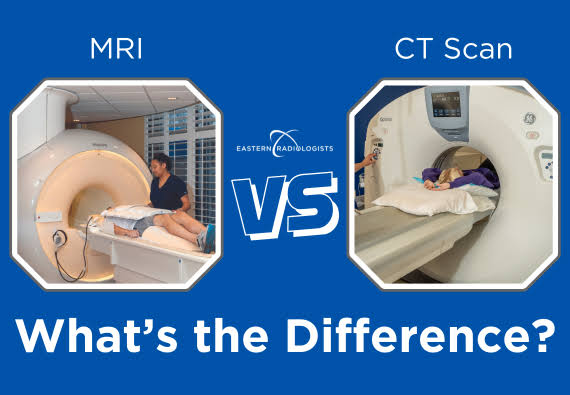
If your doctor has recommended imaging and you’re not sure whether you need a CT scan or an MRI scan, you’re not alone. Both are powerful tools that let doctors see inside your body without surgery — but they work differently, show different things, and are used for different situations.
Here’s a simple, no-jargon breakdown to help you understand the difference.
What Is a CT Scan?
A CT (Computed Tomography) scan uses a series of X-ray images taken from different angles, which a computer combines into detailed cross-sectional pictures of your body. Think of it as a much more detailed version of a regular X-ray.
Key facts about CT scans:
- Uses X-ray radiation (a low but real dose)
- Takes just a few minutes to complete
- Excellent at showing bones, lungs, and internal bleeding
- Great for emergency situations (like trauma, stroke, or internal injuries)
- Machine is a short tunnel — less likely to feel claustrophobic
- Generally cheaper than an MRI
What Is an MRI Scan?
An MRI (Magnetic Resonance Imaging) scan uses strong magnets and radio waves — no radiation at all — to create detailed images of soft tissues in the body.
Key facts about MRI scans:
- Uses magnetic fields, not radiation
- Takes 30–60 minutes, sometimes longer
- Excellent at showing soft tissues — brain, spinal cord, ligaments, muscles, joints
- Better for detailed, non-emergency diagnosis
- Machine is a long, narrow tunnel — can feel claustrophobic for some people
- Generally more expensive and takes longer to schedule
CT vs MRI: Side-by-Side Comparison
| Feature | CT Scan | MRI Scan |
|---|---|---|
| Technology | X-rays | Magnets + radio waves |
| Radiation | Yes (low dose) | No |
| Scan time | Minutes | 30–60+ minutes |
| Best for | Bones, lungs, bleeding, trauma | Brain, spinal cord, joints, soft tissue |
| Noise | Quiet | Loud (banging/clicking sounds) |
| Cost | Lower | Higher |
| Emergency use | Very common | Less common (except stroke protocols) |
When Do Doctors Usually Order a CT Scan?
- Suspected fractures or bone injuries
- Chest or lung problems (pneumonia, tumors, blood clots)
- Internal bleeding after an accident
- Detecting kidney stones
- Cancer staging and monitoring
- Fast diagnosis needed in the ER
When Do Doctors Usually Order an MRI Scan?
- Brain and spinal cord conditions (tumors, stroke follow-up, nerve issues)
- Joint and ligament injuries (knee, shoulder, ACL tears)
- Soft tissue problems (muscles, tendons)
- Detailed look at organs like the liver or uterus
- Conditions like multiple sclerosis
Is One Safer Than the Other?
Both are considered safe when used appropriately:
- CT scans involve a small dose of radiation, so doctors avoid overusing them, especially in children and pregnant women.
- MRI scans have no radiation but aren’t suitable for people with certain metal implants, pacemakers, or severe claustrophobia unless special accommodations are made.
So, Which One Do You Need?
The honest answer: you don’t get to choose — your doctor will recommend the scan based on:
- What part of the body needs to be examined
- What condition is suspected (bone vs. soft tissue vs. bleeding)
- How urgent the situation is
- Any safety factors (implants, pregnancy, allergies to contrast dye)
If you’re ever unsure why a specific scan was ordered, it’s completely reasonable to ask your doctor: “Why this scan instead of the other one?” A good doctor will explain the reasoning in plain terms.
Quick Takeaway
- Need speed, or checking bones/bleeding/lungs? → CT scan
- Need detail on brain, spine, joints, or soft tissue? → MRI scan
- No radiation preferred and time isn’t urgent? → MRI scan
- Claustrophobic or need a fast result? → CT scan may be more comfortable